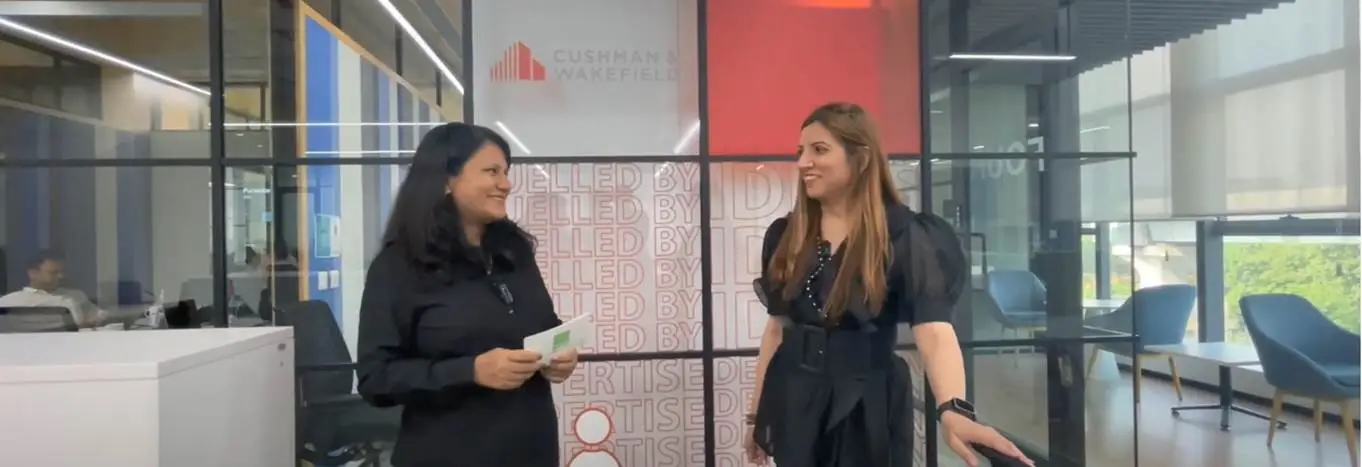
In a warmly decorated office, Zainab Mukadam, then Head of Design and Workplace at Cushman & Wakefield India, talks with Sibani Sarma about how design shapes workplace experience. It quickly becomes clear that Zainab is not only a designer but a strong advocate for rethinking how we approach the places we work in.
A shift in what the workplace is for
Zainab’s office has a festive, welcoming feel, reflecting a culture of celebration and hospitality. The conversation turns to the employee’s journey through the workplace, which is becoming the centre of how people experience work.
Sibani points to a significant shift: a workforce now largely made up of Millennials and Gen Z that values experience over traditional ideas of work. The office has become more than a place to complete tasks. It is somewhere people look for connection and meaning.
Designing for wellbeing
Zainab stresses the designer’s role in creating spaces that support wellbeing and engagement. Her approach centres on adaptable environments that respond to the changing needs and preferences of the people who use them.
Flexibility and involving employees
The traditional nine-to-five model, Zainab says, no longer works. People want flexibility in when and how they work, and designers must create spaces that respond to that. She emphasises involving employees in the design process, so that they shape their own work environment. That involvement builds collaboration, belonging and autonomy.
Integrating technology
As digital and physical work converge, technology becomes part of the space. IT teams play a crucial part, Zainab notes, but architects are equally responsible for making sure technology helps the employee experience instead of getting in its way.
An end-to-end view
Zainab’s views reflect Cushman & Wakefield’s approach as a workplace solutions provider, covering strategy, design, build and management, with a focus on adaptability and on giving employees a say in their workspace.
The conversation leaves a clear message: the workplace is no longer just about getting work done. It is about wellbeing, choice and belonging, and design has a central role in delivering them.
At iDream, we approach the same question through the EXD Framework, starting with the friction that makes work harder than it needs to be. Read more in The Hidden Cost of Workplace Friction.