Work patterns have changed faster than most office layouts. Many organisations now pay for space designed for a five-day, one-desk-per-person week that no longer exists. Office space optimization means matching the space you hold to the way people actually work, so that you stop paying for what sits empty and start providing what is missing.
Five strategies make the biggest difference.
1. Measure before you change anything
Every optimization decision should start with evidence of how the space is used today: average and peak desk occupancy, meeting room use, and what employees say gets in their way. Our guide to office space utilization metrics explains what to measure and how. Cutting space on assumptions is the most common and most expensive mistake.
2. Move to flexible layouts
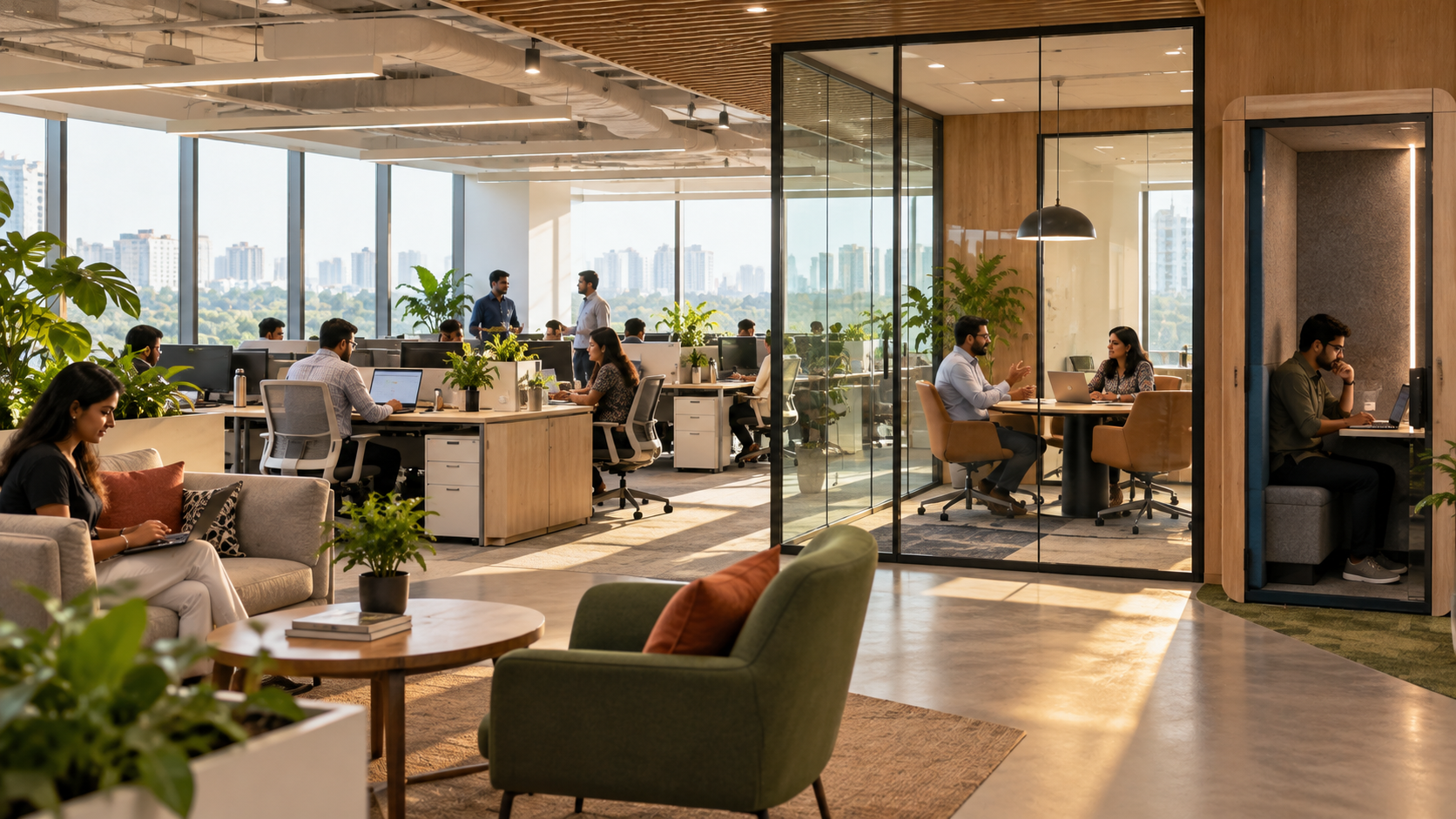
Fixed workstations and enclosed cubicles are giving way to layouts that let people choose where to work according to the task: quiet spaces for focused work, small rooms for team discussions, open areas for informal conversation. Flexible layouts support collaboration and reduce the need for a dedicated desk for every employee. Activity-based working is the most developed version of this approach.
3. Introduce desk sharing with care
Desk sharing, often called hot-desking, lets employees use any available desk instead of an assigned one, which can significantly reduce the space given to individual workstations. It needs planning: shared monitors and docking stations, personal storage, clear desk rules and an easy booking system. Without these, desk sharing becomes a daily source of friction and people stop coming in.
4. Use technology to see and manage space
Occupancy sensors and space analytics show which areas are underused. Booking platforms let people find and reserve desks, rooms and collaboration areas from a phone or laptop. Connected lighting and climate systems can adjust to occupancy and cut energy cost. The aim is not more technology but better information for decisions.
5. Plan for hybrid work deliberately
Not every employee needs a dedicated desk in the office every day. Where hybrid work is permanent, plan the office around the days and activities people come in for, and invest in the tools that let teams work well when they are apart. Decide team norms for office days explicitly; leaving them to chance produces empty Mondays and overcrowded Tuesdays.
Optimizing without creating friction
The goal of office space optimization is not the smallest possible office. It is an office that costs less per person actually using it and works better for the people in it. Changes to layout and desk allocation also need careful change management, because people react to losing an assigned desk far more strongly than the floor plan suggests.
iDream’s workplace strategy work starts with exactly this evidence. If you want to know where your current space is costing you before deciding what to change, start with an EXD Audit.